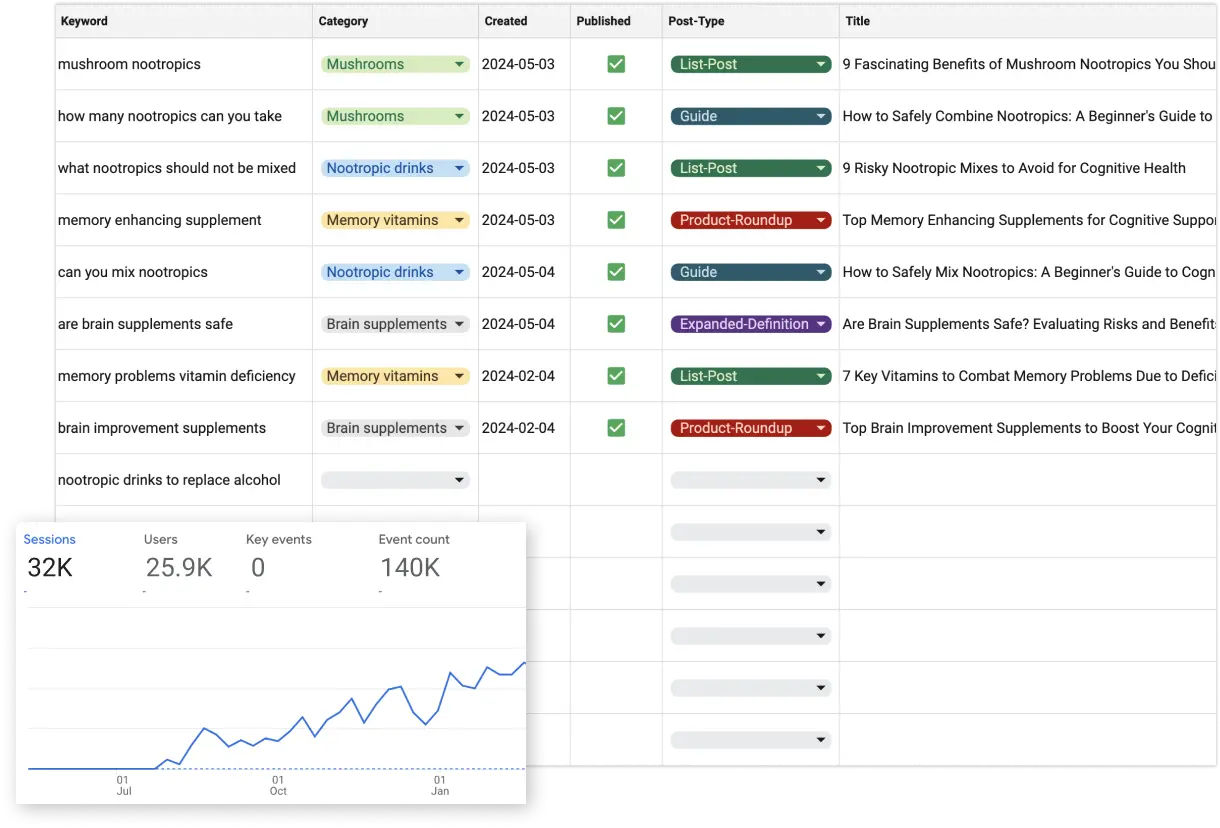
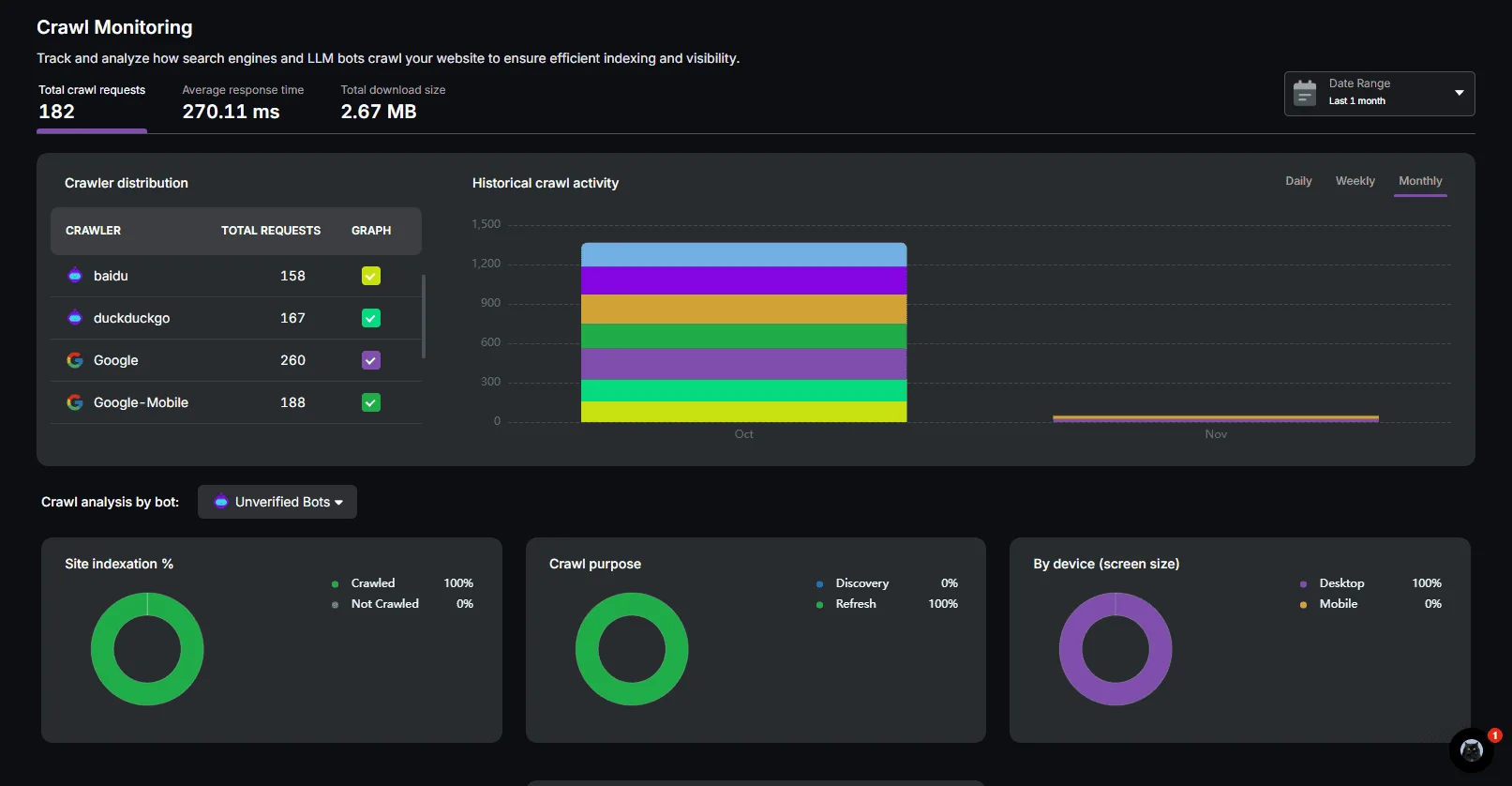
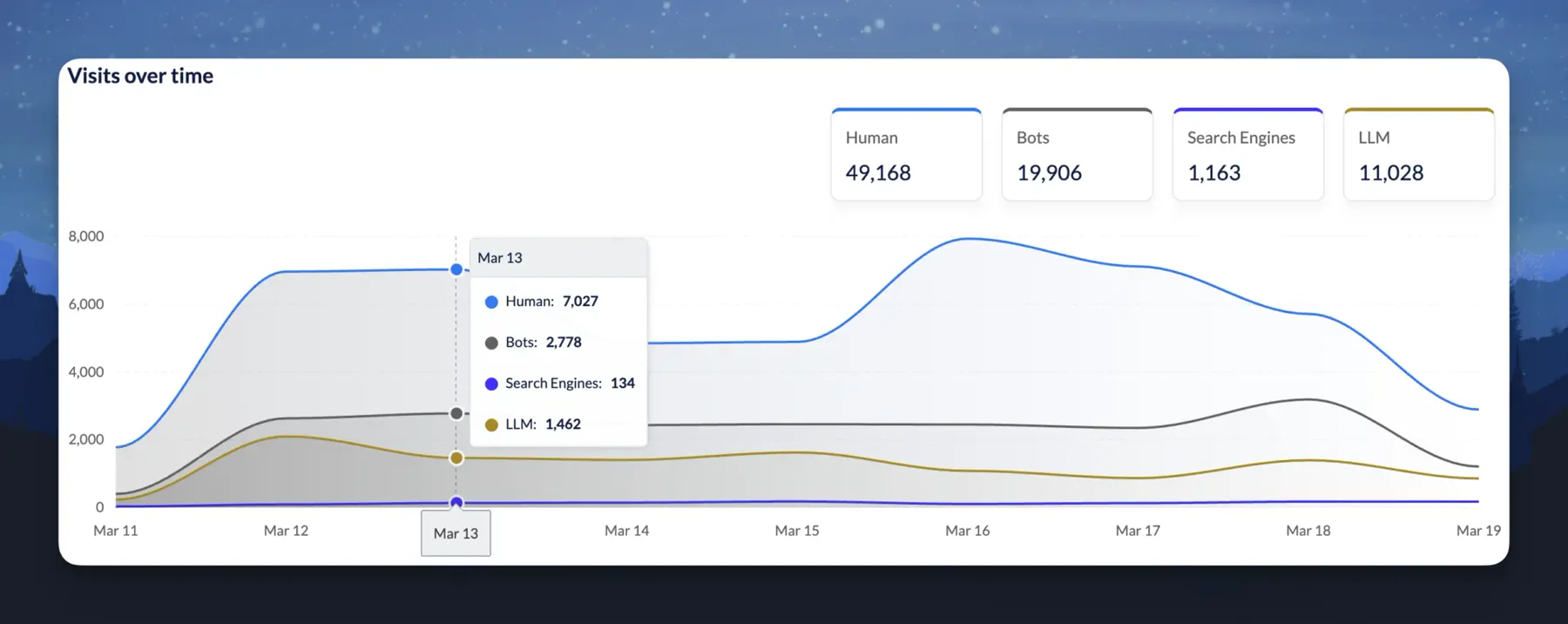
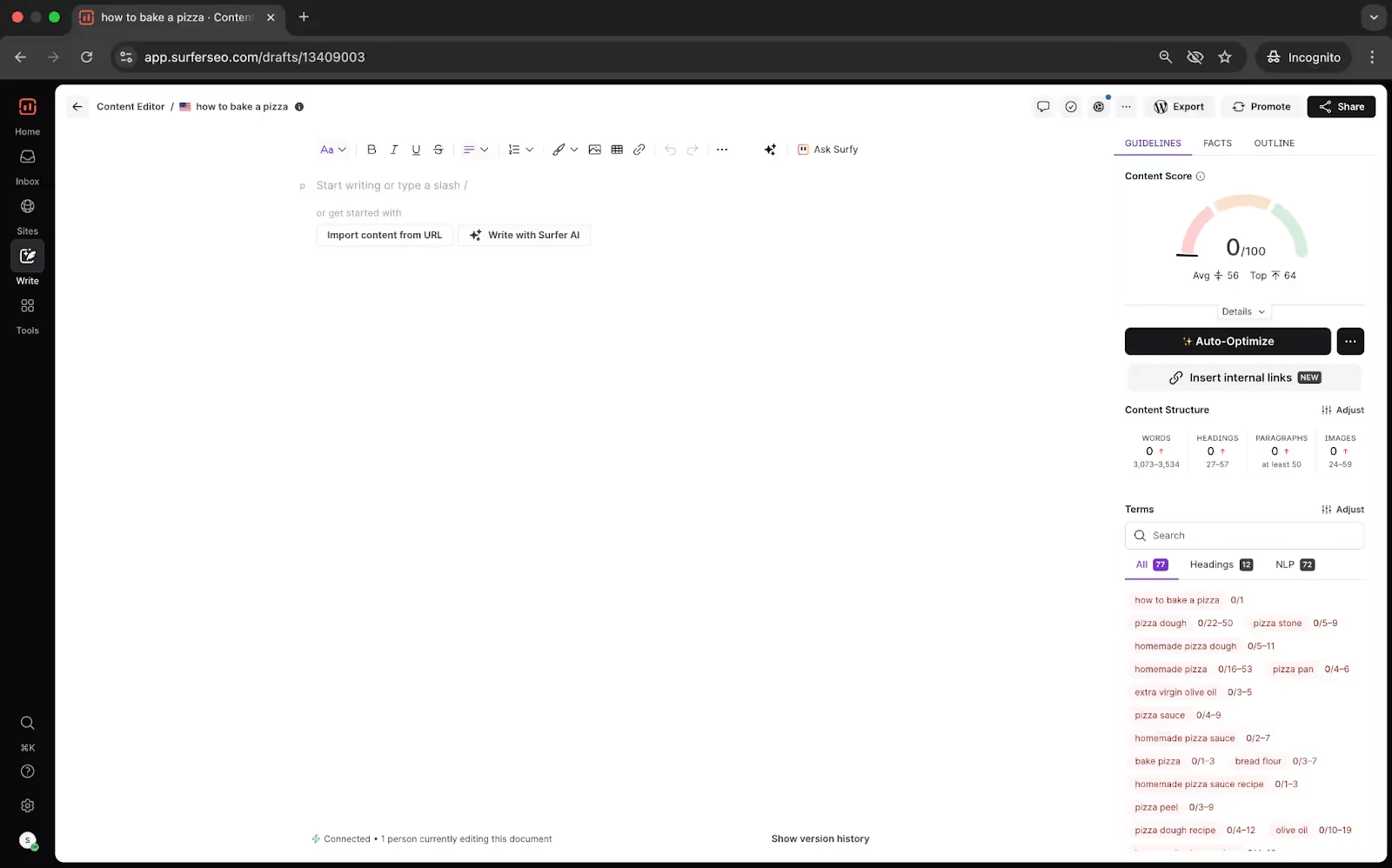
Most tools sold as SEO automation only automate the reporting. This guide covers the eight worth shortlisting, what each one actually does for you, and where each falls short, so you can match a tool to the part of SEO that is genuinely your bottleneck.
Last updated: July 2026·By The Intelliminds team·8 tools covered
Intelliminds is our own product, and we have flagged it wherever it appears below. Every other tool here is a competitor we do not own and earn nothing from.
Start here: the right tool for three common jobs
For publishing content
Intelliminds
Automated SEO software that runs the whole content workflow: researches topics, writes in your brand voice, publishes to your CMS, then refreshes articles that start slipping. Capped output with a optional human approval step.
Scans a site and deploys technical and on-page fixes automatically. The strongest option here for the crawl, diagnose and fix loop across large or messy sites.
What counts as the best SEO automation software in 2026
The category has shifted. A year ago, 'best' meant the most features in a dashboard. Today, it means the tool that actually moves organic traffic and saves real hours per week.
Output quality
Does the content rank, or does it sit unread? SEO automation is pointless if the output does not index.
Workflow coverage
Research, writing, optimization, publishing, maintenance. How much of the SEO workflow is actually automated?
Integrations
Does it connect to your CMS, your analytics, your existing SEO stack?
Price per outcome
Not just the sticker price. What is the cost per published, ranking page?
Watch for these red flags
Any tool that promises specific rankings in a fixed timeframe. No honest SEO tool can guarantee position one.
Any tool that publishes duplicate or spun content without human review. Scaled content abuse penalties are real.
Lifetime deals on a service that requires ongoing server compute. If the price looks too good to sustain, it probably is not.
The 8 best SEO automation platforms, compared
Ordered by how much of the job each one takes off your hands, starting with the tools that execute and ending with the ones that assist. Every entry lists what it does well and where it stops.
Intelliminds is our own product, and we have flagged it wherever it appears below. Every other tool here is a competitor we do not own and earn nothing from.
1
Intelliminds
Our product
Best for: Teams whose bottleneck is producing and maintaining content
An SEO automation platform for the content side of the job. It researches buyer-intent topics, writes in your brand voice, handles on-page SEO and internal linking, publishes to your CMS, then refreshes articles that start losing position.
Strengths
Publishes finished articles rather than recommendations
Output capped at 8 to 90 articles a month, with human approval required
Refreshes decaying content using your Search Console data
Publishes natively to WordPress, Shopify, Webflow, Wix, and Ghost
Limitations
No technical audits, crawling, or rank tracking
Output caps make it a poor fit for programmatic page programs
Newer platform with a smaller review footprint than the big suites
Best for: Agencies fixing technical SEO across many sites
An agent that scans your site and deploys technical and on-page fixes in real time. Broad coverage across audits, rank tracking, and local SEO, with the fixes applied for you rather than handed over as a to-do list.
Strengths
Deploys technical and on-page fixes automatically
Broad toolset spanning audits, rank tracking, and local SEO
Handles large and messy sites well
Limitations
Optimizations can revert if you cancel your subscription
Lighter on editorial content quality than dedicated writing tools
Best for: Large sites needing bulk on-page changes
On-page SEO automation that applies changes sitewide through a single code snippet, with no CMS restrictions. Good breadth across titles, meta descriptions, and schema at a scale that would be impractical by hand.
Strengths
Bulk on-page changes across thousands of pages
Works on any CMS via one script install
Fast to deploy with no developer involvement
Limitations
Does not write or publish editorial content
Changes are applied through a script layer rather than your CMS
Best for: Writers optimizing drafts before they publish
The reference tool for on-page content optimization, scoring drafts in real time against the pages already ranking. Surfer AI adds drafting on top, though publishing and ongoing maintenance stay with you.
Strengths
Real-time content scoring against SERP competitors
A well-rounded SEO platform covering audits, rank tracking, and white-label reporting at a lower price than the enterprise suites. Automation here means work scheduled and delivered on time rather than work performed for you.
Strengths
Automated audits, rank tracking, and white-label reporting
Competitive pricing when you are managing many clients
A premium content optimization tool focused on terminology coverage and editorial quality. Excellent at giving a writer a clear target, and it integrates cleanly into the tools they already work in.
Strengths
High-quality content briefs and term coverage grading
Best for: Technical teams building their own pipelines
A no-code automation builder with an LLM layer, closer to Zapier than to a dedicated SEO tool. Enormously flexible if you are willing to design the workflows, and it connects to most of the stack you already run.
Strengths
Build custom SEO agents without writing code
Connects to most tools you already use
Free tier to test the approach before committing
Limitations
You design, debug, and maintain every workflow
Not an SEO tool out of the box, so there is real setup time
Best for: Directory, location, and comparison page programs
Programmatic SEO at template scale, generating large numbers of pages from a structured dataset. Powerful for location and comparison page sets, and the approach that needs the most care to stay within Google's spam policies.
Strengths
Generates thousands of templated pages from structured data
Strong fit for location and comparison page sets
Low entry price for the output volume
Limitations
Indexation, not generation, is the usual failure point
Templated pages at volume carry real scaled content abuse risk
The clearest split in this category is between tools that hand you work and tools that do it. Here is where four of the most-shortlisted options land.
Intelliminds
Search Atlas
Surfer SEO
Clearscope
Keyword and topic research
Yes
Yes
Yes
Yes
Writes full drafts
Yes
No
Yes
No
Writes in your brand voice
Yes
No
No
No
On-page optimization
Yes
Yes
Yes
Yes
Technical site audits
No
Yes
No
No
Automatic internal linking
Yes
Yes
No
No
Publishes to your CMS
Yes
No
No
No
Refreshes decaying content
Yes
No
No
No
Capped output with human approval
Yes
No
No
No
Work stays live if you cancel
Yes
No
Yes
Yes
Starting price
$24/mo
$99/mo
$99/mo
$189/mo
Prices are each vendor's lowest paid tier as listed in July 2026. Check current pricing with the vendor before you buy.
How much should you actually pay for SEO automation
The right price depends on the volume you need and which parts of the SEO workflow you want to keep manual.
Hobbyist
$24 to $49 per month
Entry-level automation that covers research, writing, and publishing for a single site. Intelliminds starts here at $24 per month.
Solopreneur
$49 to $99 per month
Mid-tier tools with optimization and analysis features. You still handle the writing and publishing yourself.
Growing business
$99 to $195 per month
Full-suite tools with technical audits, rank tracking, and content production in one platform.
Enterprise
$300 to $1,000+ per month
Dedicated SEO platforms with multi-site management, custom reporting, and API access.
Common overpayment traps
Paying $189 per month for Clearscope when you only need content production, not just optimization scoring.
Annual contracts at $99 per month or more with no ramp clause. Test monthly first.
Buying a rank tracker and an audit tool when one platform covers both.
Paying for features you never log in to use. Most SEO tools have a 30-day activation drop-off.
What to know before you choose
SEO automation is a broad label covering very different products. Knowing which part of the workflow a tool actually automates is most of the buying decision.
What is SEO automation software?
SEO automation software uses AI to run tasks you would otherwise do by hand: keyword research, content briefs, writing, on-page optimization, internal linking, publishing, reporting, and content refreshes. You will see the same category sold as an SEO automation platform, an automated SEO platform, or auto SEO software. The labels differ; what matters is which part of the workflow the product actually takes off you.
The distinction that matters is execution. Traditional SEO tools give you data to analyze and a list of recommendations. Automated tools do the work. Most products marketed as automation sit on the analysis side, which is why buyers often feel the time savings never materialize.
Why teams use it
Producing content consistently is the recurring cost that stops most SEO programs. Technical fixes are largely a one-off; publishing is forever. Automation moves the bottleneck by handling research, drafting, and publishing so a small team can hold a cadence that would otherwise need writers or an agency retainer.
The secondary benefit is maintenance. Rankings decay quietly, and most teams never get around to refreshing older posts. Tools that watch Search Console and rewrite slipping articles recover traffic that would otherwise be written off.
What can and cannot be automated
Repetitive production work automates well. Judgment does not.
Safe to automate: keyword research, clustering, briefs, drafting, on-page SEO, internal linking, publishing, reporting, content refreshes
Keep human: final editorial approval, strategic keyword selection, brand and positioning decisions, link outreach, risk calls
How to choose without getting penalized
In March 2024 Google replaced its auto-generated content policy with scaled content abuse, and enforcement has tightened through every core update since. Google's position is that it does not penalize AI content; it penalizes mass-producing pages with no original value. The reported pattern for penalized sites is 50 to 500 articles a day with no human review.
That makes output caps a feature rather than a limitation. Ask whether a tool lets you set a ceiling, whether it researches before it writes, and whether a human approves anything before it publishes. Then ask what happens if you cancel: some tools apply changes through a proxy or script, and those optimizations revert when you stop paying.
Finally, judge on indexation rather than volume. A large sitemap Google ignores is worth less than a smaller set of pages that actually index and hold position.
Final verdict: which SEO automation tool should you pick
Pick the tool by your bottleneck and how much of the SEO workflow you want to own.
Your bottleneck is producing and maintaining content
Intelliminds at $24 per month
Your bottleneck is technical SEO across a large site
A technical SEO suite at $99 per month or more
You have writers and need optimization guidance only
An optimization scoring tool at $189 per month or more
You need on-page scoring and content briefs
An on-page scoring tool at $99 per month or more
Our recommendation
Our recommendation: Intelliminds
Intelliminds
Our pick if your bottleneck is producing and maintaining content, and you would rather not gamble your domain on uncapped AI output. If your bottleneck is something else, one of the tools above will serve you better.
Best for
Teams scaling SEO content safely
Starting price
$24/month
Free version
Free trial, no card required
Of the eight tools here, Intelliminds is the automated SEO platform that carries a topic all the way from research to a published, maintained article. It researches buyer-intent topics, writes in your brand voice using a knowledge base built from your own site, handles on-page SEO and internal linking, publishes straight into your CMS, and then refreshes articles that start losing position in Search Console.
The design decision that separates it from the rest of the category is the cap. Plans run from 8 to 90 articles a month, and every article needs your approval before it goes live. That is deliberately far below the volume pattern Google's scaled content abuse enforcement targets, and it is the opposite of how most AI content tools are sold.
It is not the right tool for everything. If your problem is technical SEO across a large site, Search Atlas or Alli AI will serve you better. If you have in-house writers and only need optimization guidance, Clearscope is the stronger fit. Intelliminds is for teams whose bottleneck is producing and maintaining the content itself.
Pros
Publishes finished articles, not just recommendations
Output caps keep you clear of scaled content abuse patterns
Refreshes decaying content automatically from Search Console
Entry tier at $24 against a category starting near $99
Unused credits roll over for 12 months
Your content stays live if you cancel
Cons
Focused on content, so it does not handle technical audits or rank tracking
Output caps mean it is a poor fit for high-volume programmatic page programs
Newer platform with a smaller review footprint than the established suites
From keyword to published article, it runs the content side of SEO for you. You approve, it ships.
01
Researches keywords and topics
It analyzes search volume, difficulty, and intent, then proposes the topics actually worth publishing rather than dumping a keyword list on you.
0 buyer-intent topics
VolumeDifficulty
Gut friendly dog foodBest opportunity
gut friendly dog food+3 more
19,020Low
Dog food for sensitive stomachs
sensitive stomach dog food+2 more
9,460Medium
High protein dog food
high protein dog food+2 more
9,250Medium
02
Writes optimized, on-brand content
AI drafts each article in your voice using your brand knowledge base, with on-page SEO, internal links, and sourced references already handled.
Best dog food for puppies
Commercial intent
Comparison
Cold pressed vs fresh dog food
Informational intent
Guide
Grain-free puppy food
Transactional intent
Landing page
03
Publishes to your site automatically
Approved articles ship straight to WordPress, Shopify, Webflow, Wix, or Ghost on a steady schedule, never in bulk dumps.
Publishing scheduleAuto-publishing
Articles / month
16≈ 192 a year
Days scheduled
MonTueWedThuFriSatSun
Time of day 10:00 AM EST
04
Refreshes content before it decays
It reads your Search Console data, finds articles losing position, and rewrites them so rankings recover instead of quietly sliding.
Ranking impactTracking 4 articles
Best Dog Food for Puppies
#12Queued
Cold Pressed vs Fresh Dog Food
#9Queued
Best Gut-Healthy Dog Food
#15Queued
Dog Food for Sensitive Stomachs
#8Queued
Why Intelliminds?
Automated SEO content that indexes, ranks, and holds
Publishing volume is the wrong metric. Articles that get indexed and hold position are the only ones worth paying for. Every topic runs through AUTH-IQ, our intelligence layer that reads buyer intent and picks the content format most likely to rank.
best tools for [job]
alternatives to [competitor]
what is [product category]?
best [product] for [use case]
SEO Sales Pages
Sales, category, and use-case pages built to convert ready-to-buy searchers.
Comparison Pages
You-vs-competitor pages that win buyers weighing their options.
Buyers Guides
Best-product-for-use-case guides matched to commercial intent.
Top-Of-Funnel Articles
Editorial articles that build authority and feed the rest of the funnel.
Alternative Pages
Alternatives-to-competitor pages that capture switchers mid-decision.
Customer Results
See real organic growth from SEO content
Make sure your brand shows up when customers are discovering new products/services and deciding which to choose.
Local Services
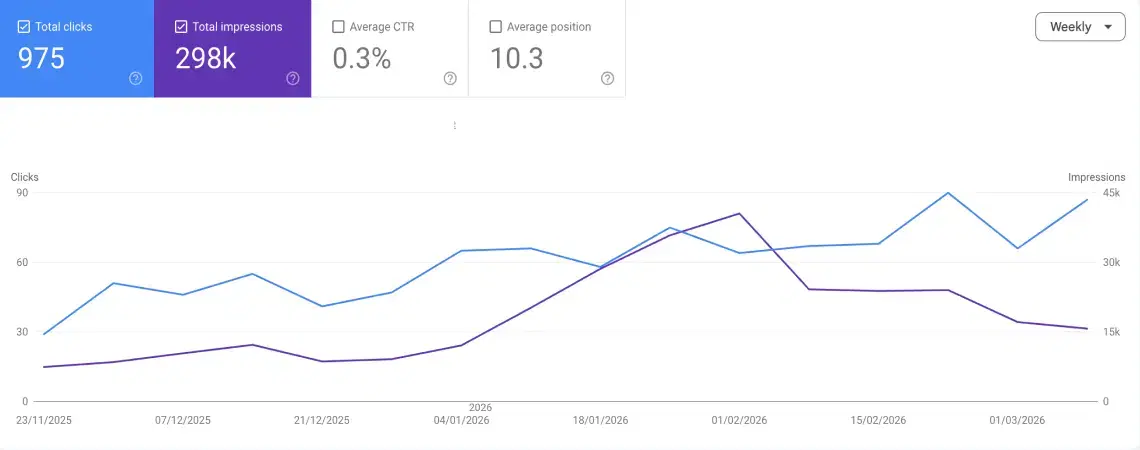
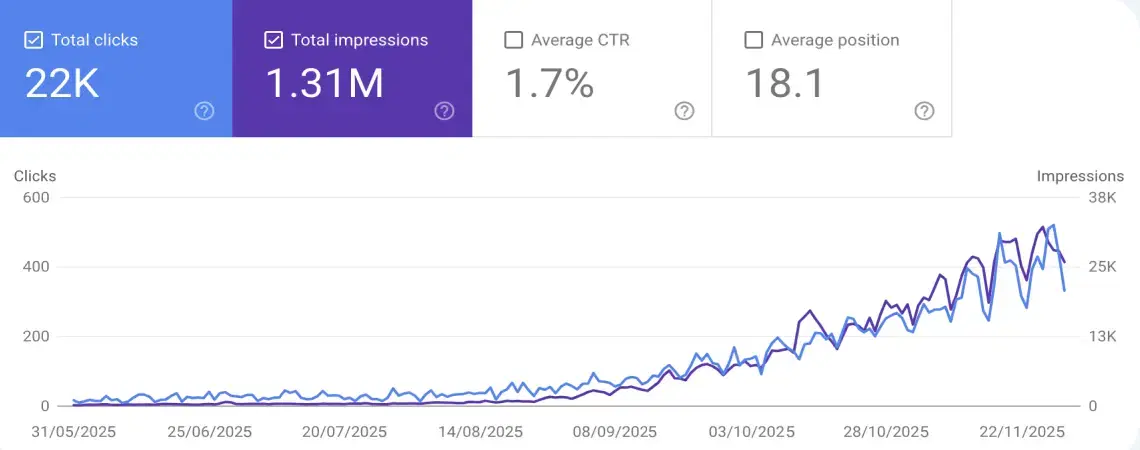
Hondo Resources saw 3× growth in organic clicks per week.
300%
Organic Traffic
Startup
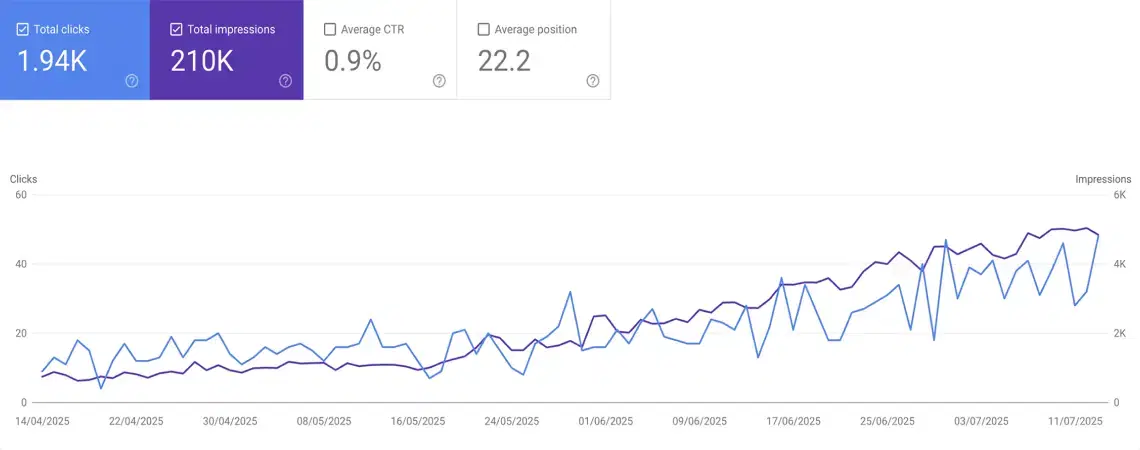
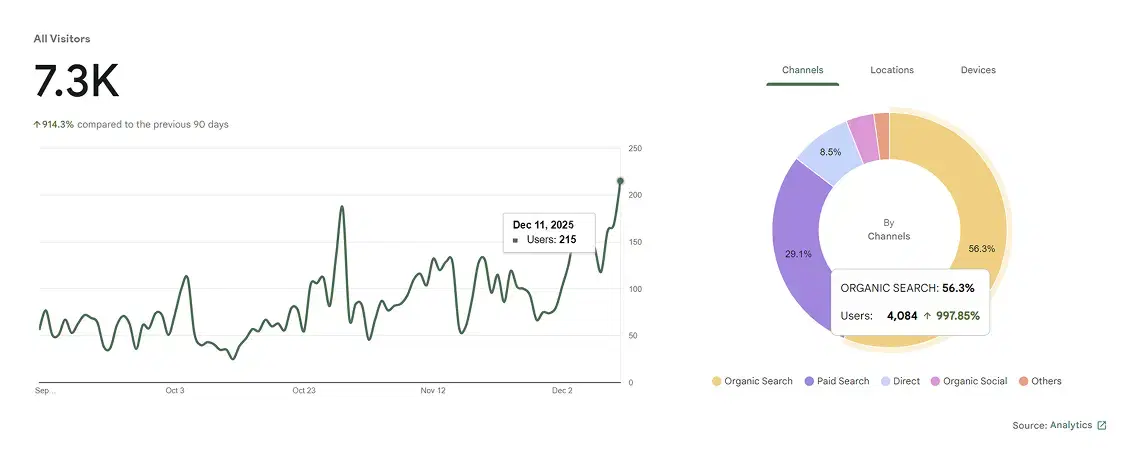
WriteSeen saw 5× growth in organic clicks per day.
500%
Organic Traffic
Startup
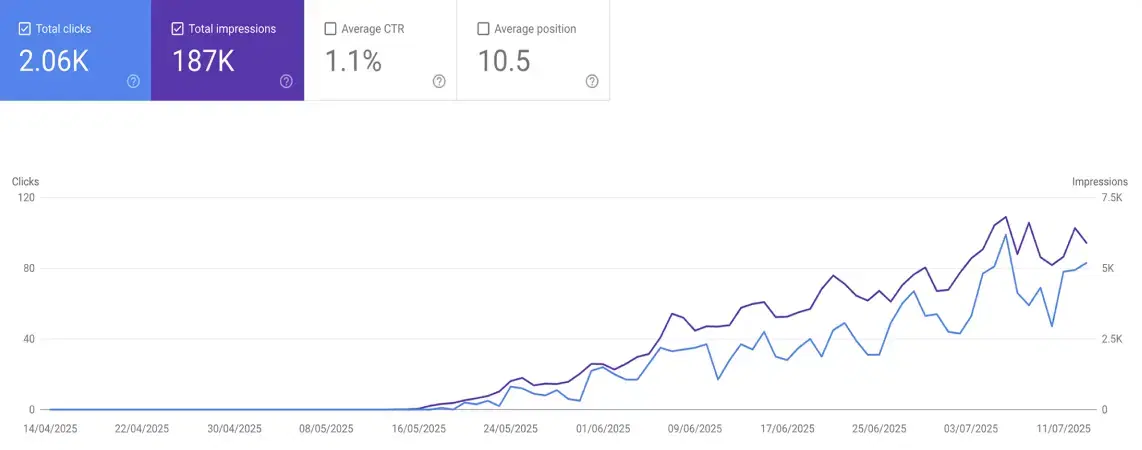
Level 33 Entertainment turned a new blog into a steady stream of traffic.
2K
Organic Traffic
“Intelliminds is one of the best products I’ve seen for helping clients scale SEO content without adding more work to their team.”
Lucas MondoraGrowth Marketer, MarketerHire
Local Services
Hondo Resources saw 3× growth in organic clicks per week.
300%
Organic Traffic
Startup
WriteSeen saw 5× growth in organic clicks per day.
500%
Organic Traffic
Startup
Level 33 Entertainment turned a new blog into a steady stream of traffic.
2K
Organic Traffic
“Intelliminds is one of the best products I’ve seen for helping clients scale SEO content without adding more work to their team.”
Lucas MondoraGrowth Marketer, MarketerHire
Ecommerce
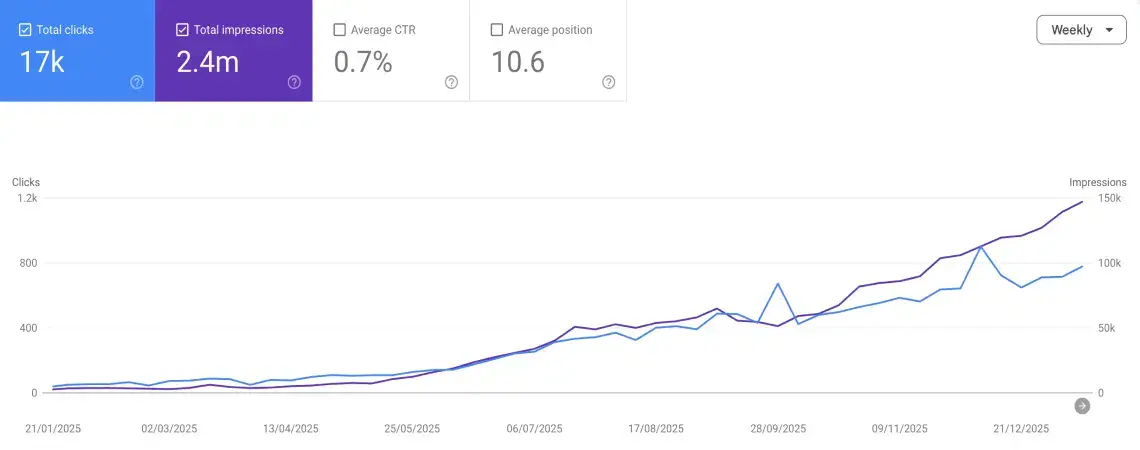
ASM Tuning saw sustained organic growth to over 800 clicks per day.
1950%
Organic Traffic
“Intelliminds helped us publish more articles than we ever thought possible and two years later they’re still ranking, generating traffic, and bringing in revenue every month.”
Robbie WynessFounder, Ambitionz Group
Startup
Greenlight Coverage grew a new blog to over 500 clicks per day.
12.5×
Organic Traffic
Ecommerce
Feminine Health saw organic search become their top source of new users.
10×
Organic Traffic
“Intelliminds turned SEO from something we kept putting off into a reliable channel for qualified traffic.”
Sabby ChoudharyFounder, Happy Ads
Ecommerce
ASM Tuning saw sustained organic growth to over 800 clicks per day.
1950%
Organic Traffic
“Intelliminds helped us publish more articles than we ever thought possible and two years later they’re still ranking, generating traffic, and bringing in revenue every month.”
Robbie WynessFounder, Ambitionz Group
Startup
Greenlight Coverage grew a new blog to over 500 clicks per day.
12.5×
Organic Traffic
Ecommerce
Feminine Health saw organic search become their top source of new users.
10×
Organic Traffic
“Intelliminds turned SEO from something we kept putting off into a reliable channel for qualified traffic.”
Sabby ChoudharyFounder, Happy Ads
Key Features
Your complete SEO content system
Keyword research, brand-voice writing, on-page SEO, internal linking, publishing, and refresh. One platform.
Finds the right topics
It weighs search volume, difficulty, and buyer intent, then hands you a shortlist worth writing instead of a raw keyword dump.
Publishes on your schedule
Set how many articles a week and it writes and posts them on time, at a cadence that reads as a real publication.
Posts straight to your CMS
Native publishing to WordPress, Shopify, Webflow, Wix, and Ghost. No copy-paste, no reformatting.
Catches content decay
It watches Search Console for articles losing position and refreshes them before the traffic is gone.
Automated content people want to read it
Sounds like your brand
Learns your site, audience, and tone from your brand knowledge base, plus any articles you point it to.
Editorial grade content
Researched, sourced articles people finish, not the thin AI filler Google now demotes by policy.
Adds high quality images
Generates AI visuals or pulls stock, and you decide how many go in each post.
You get the final say
Review, edit, or approve in bulk. Nothing publishes until you say so, on any plan.
SEO fundamentals, so updates can't break you
Nails on-page SEO fundamentals
Title tags, meta descriptions, heading structure, and clean URLs are set correctly on every post.
Automated internal linking
Connects each new post to your existing pages and cites credible external sources, with no manual link audit.
Uses your Search Console data
Pulls real query and position data from GSC to decide what to write next and what to refresh.
Our story
We were tired of SEO tools that didn't do the work
So we built SEO automation software that runs the content side for you, instead of handing you another to-do list.
The problem we kept hitting
Most SEO automation just gave us more dashboards and recommendations. We still had to research, write, and publish everything ourselves.
The tools that did write content sprayed generic articles at volume. Some never got indexed at all. The ones that did ranked briefly, then vanished with the next core update.
So we built Intelliminds
We automated the content side end to end: keyword research, writing, on-page SEO, internal linking, and publishing, in one workflow that runs without a content team.
Capped on purpose
We cap output at 8 to 90 articles a month. That is a deliberate constraint, not a limitation. Fewer articles that index and hold beat a large sitemap Google ignores.
FAQ
Frequently asked questions
What is the best SEO automation software?+
There isn't one, because these tools do different jobs. For content production and publishing, Intelliminds is our pick since it runs the full workflow and caps output. For technical SEO across large sites, Search Atlas and Alli AI are stronger. For on-page optimization of drafts you write yourself, Surfer SEO is the category standard. Start from which part of SEO is actually your bottleneck.
Can SEO really be automated?+
Parts of it. Keyword research, briefs, drafting, on-page SEO, internal linking, publishing, reporting, and content refreshes all automate well. Strategy, final editorial approval, brand decisions, and link outreach still need a human. Any tool claiming full autonomy across all of it is the one most likely to get your site into trouble.
Does Google penalize AI content?+
No. Google has stated it does not penalize content for being AI-generated. What it penalizes is scaled content abuse, meaning mass-producing pages with no original value, which became formal policy in March 2024. The reported pattern for penalized sites is 50 to 500 articles a day with no human review.
How much does SEO automation software cost?+
The category typically starts around $99 to $299 a month, and some tools charge extra for credits that expire monthly. Intelliminds starts at $24 a month for 8 articles with credits that roll over for 12 months. Verify current pricing with each vendor, since it changes often.
Are there free SEO automation tools?+
A few. Gumloop has a free tier for building your own workflows, and most paid platforms offer trials. Free tools generally cover analysis rather than execution, so you will still be writing and publishing yourself.
Do these tools replace an SEO agency?+
They replace the manual production an agency would do, at a fraction of a retainer. They do not replace strategy or editorial judgment. Most teams use automation to scale output and keep people focused on the work automation cannot do.